The PMP update is now the current exam
As of July 9, 2026, PMP candidates should treat the refreshed PMI exam information as the current study target. PMI's public certification page now lists the PMP exam as 180 questions with 240 minutes, plus two scheduled 10-minute breaks.
The most important planning signal is the domain mix. PMI's current exam-day information lists People at 33%, Process at 41%, and Business Environment at 26%. That is a major shift for anyone whose notes still treat Business Environment as a small finishing topic.
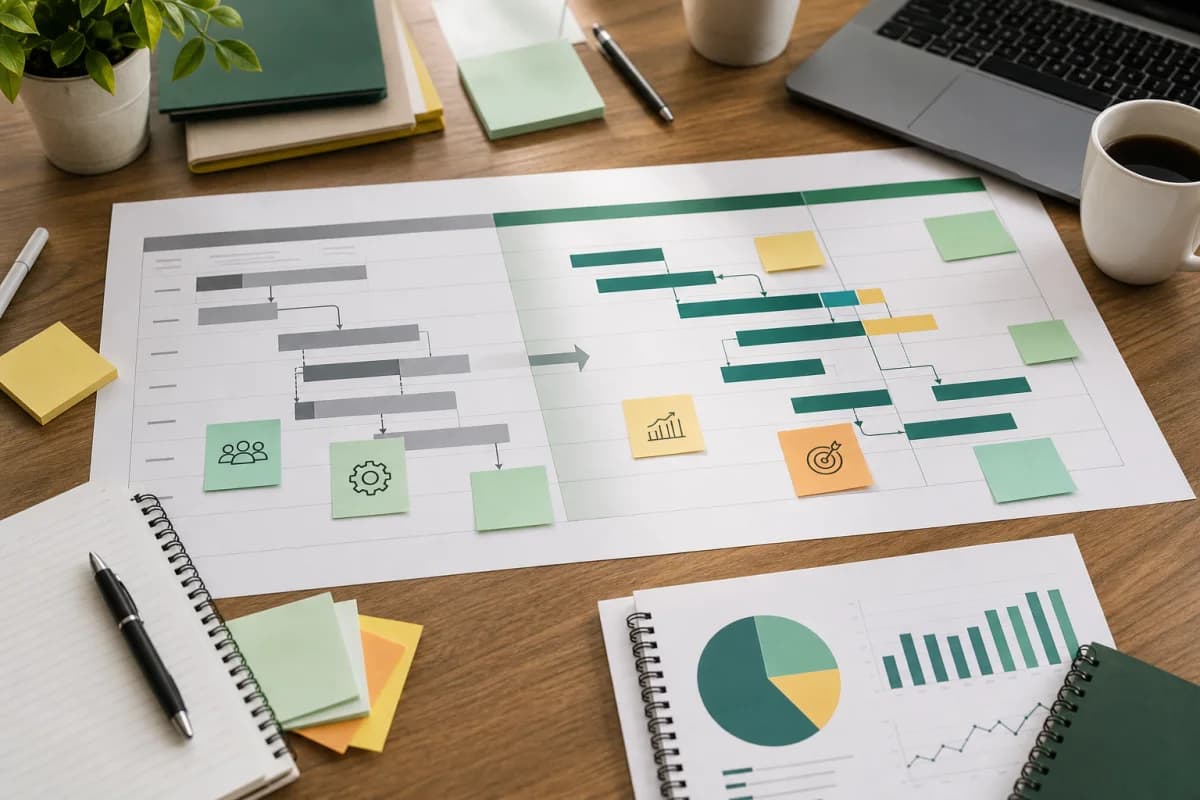
The core lesson is not that every old study habit is useless. Leadership, delivery, stakeholder work, change control, risk, and team communication still matter. The change is that more questions can ask whether a project decision supports value, outcomes, organizational priorities, and responsible delivery.
Why the Business Environment increase changes practice
Business Environment questions often test the reason behind the project decision. A technically correct action can still be weak if it ignores benefits, compliance, governance, market context, sustainability, or the sponsor's outcome.
For practice, that means you should stop treating business context as background noise. When a scenario gives you a strategic goal, a benefits target, a regulatory condition, a product outcome, or an executive constraint, underline it before choosing an answer.
A strong PMP answer usually keeps the project manager inside the right authority boundary while still protecting value. That balance is easy to miss if you only memorize process labels.
AI, sustainability, and value should be studied as decision context
Candidates are discussing AI and sustainability because PMI has made modern delivery realities more visible across project management learning. The practical study move is to treat these as scenario modifiers, not isolated trivia lists.
If AI appears in a PMP-style question, ask what the project manager must control: transparency, data quality, privacy, stakeholder expectations, risk, governance, or the human decision that remains accountable. If sustainability appears, ask how the decision affects benefits, constraints, procurement, compliance, lifecycle impact, or stakeholder acceptance.
Value delivery is the common thread. The project manager is not just moving tasks through a schedule. The exam increasingly rewards judgment about outcomes, tradeoffs, communication, and whether the work still supports the reason the project exists.
A practical reset for candidates already studying
First, update your reference point. Use PMI's current PMP certification page and Exam Content Outline as the scope checkpoint before trusting older notes, videos, or practice exams.
Second, rebalance your practice time. Do not abandon People or Process, but add deliberate Business Environment review. Use mixed sets that force you to choose between process compliance, stakeholder engagement, value protection, and escalation.
Third, review missed questions by decision type. Was the miss caused by weak process knowledge, poor stakeholder reading, ignoring business value, choosing action before analysis, or escalating too early? That diagnosis is more useful than rereading an entire chapter.
How to practice the updated exam style
Use scenario practice that makes you identify the first action, best next step, or most appropriate response. PMI's own sample-style questions emphasize impact assessment, role clarity, change control, and response options rather than simple term recall.
For every missed question, write one sentence that begins with the requirement. For example: the question asks for the first action after a supplier delay, the best way to handle an influential stakeholder, or the correct response to a change request. This keeps you from answering a different question than the one being asked.
Then name the project management principle behind the answer. Is it evaluate before acting, collaborate before escalating, follow the change process, protect business value, maintain team accountability, or manage risk proactively? That principle becomes reusable on the next scenario.
A seven-day PMP update study sprint
Day one: compare your current notes against PMI's current exam page and mark anything tied to the old timing or domain balance. Day two: run a mixed People and stakeholder set, focusing on conflict, authority, servant leadership, and communication.
Day three: run a Process-heavy set on change, schedule, risk, quality, procurement, and issue handling. Day four: run a Business Environment set and force yourself to explain the value or governance reason behind each answer.
Day five: review AI, sustainability, compliance, and benefits as context topics. Day six: take a timed mini-simulation and review misses by root cause. Day seven: retake only the weakest decision types rather than repeating every topic evenly.
What not to do after the update
Do not chase every new buzzword as if the PMP became a technology exam. AI, sustainability, and value matter because project managers need to make better project decisions in modern organizations.
Do not ignore the official scope. PMI's prep page describes the Exam Content Outline as the best source for what the exam covers, and it lists references as sources used in item development rather than a memorization checklist.
Do not measure readiness only by how many questions you have completed. Measure whether your explanations are improving. If you can explain why the best answer fits the role, timing, stakeholder need, and business outcome, your practice is moving in the right direction.
FAQ
Is the July 2026 PMP exam update live now?
Yes. July 9, 2026 is the transition date used in CertVector's PMP update coverage, and PMI's current PMP certification page now shows the updated exam timing and domain distribution.
What are the current PMP domain weights?
PMI's current exam-day information lists People at 33%, Process at 41%, and Business Environment at 26%. Candidates should use PMI's current Exam Content Outline as the source of truth for detailed scope.
Should I restart my PMP study plan?
Usually no. Keep the leadership and process work you have already done, then rebalance toward Business Environment, value delivery, stakeholder outcomes, governance, AI-aware judgment, and sustainability context.
How should I use practice questions after the update?
Use practice questions to diagnose decision errors. Track whether you missed because of process knowledge, stakeholder interpretation, business-value context, timing, or escalation judgment.
Practice for the current PMP exam
Use CertVector's PMP track to drill scenario decisions across People, Process, Business Environment, value delivery, AI, sustainability, and adaptive project work.
Open PMP practiceOfficial sources
Use the certification provider's current guidance as the final authority for exam scope, policies, and dates.
Next steps
Related articles
Related tracks
Back to resourcesLearner discussion
Ask clarifying questions or share study notes. Comments are not reviewed CertVector explanations.
No discussion yet. Start with a specific question or clarification.